
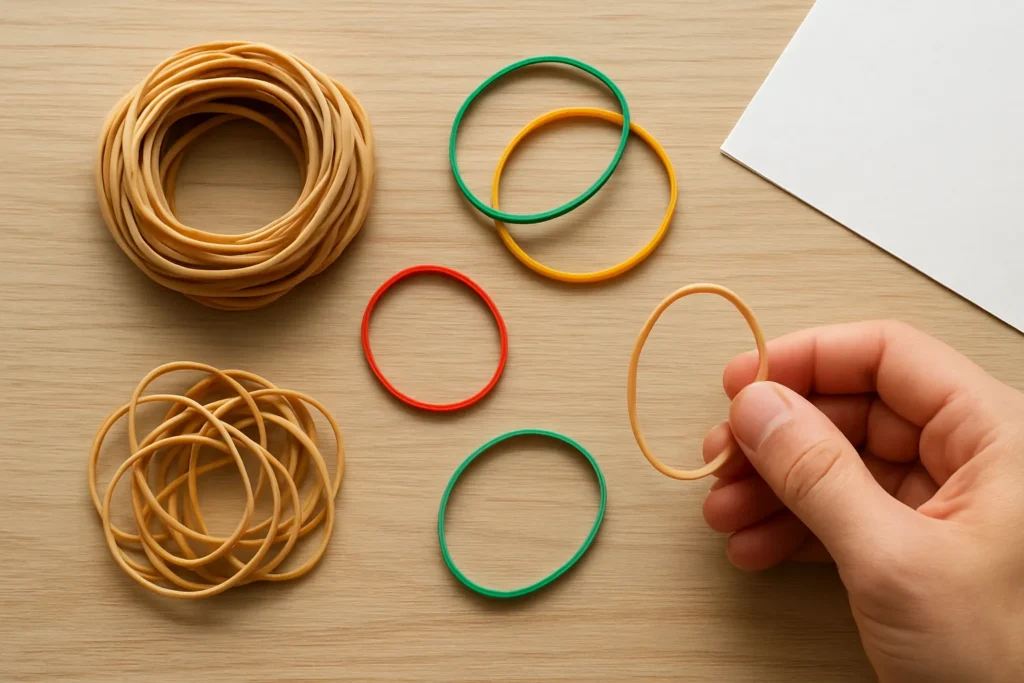
A Beginner’s Guide to Choosing and Using Rubber Bands
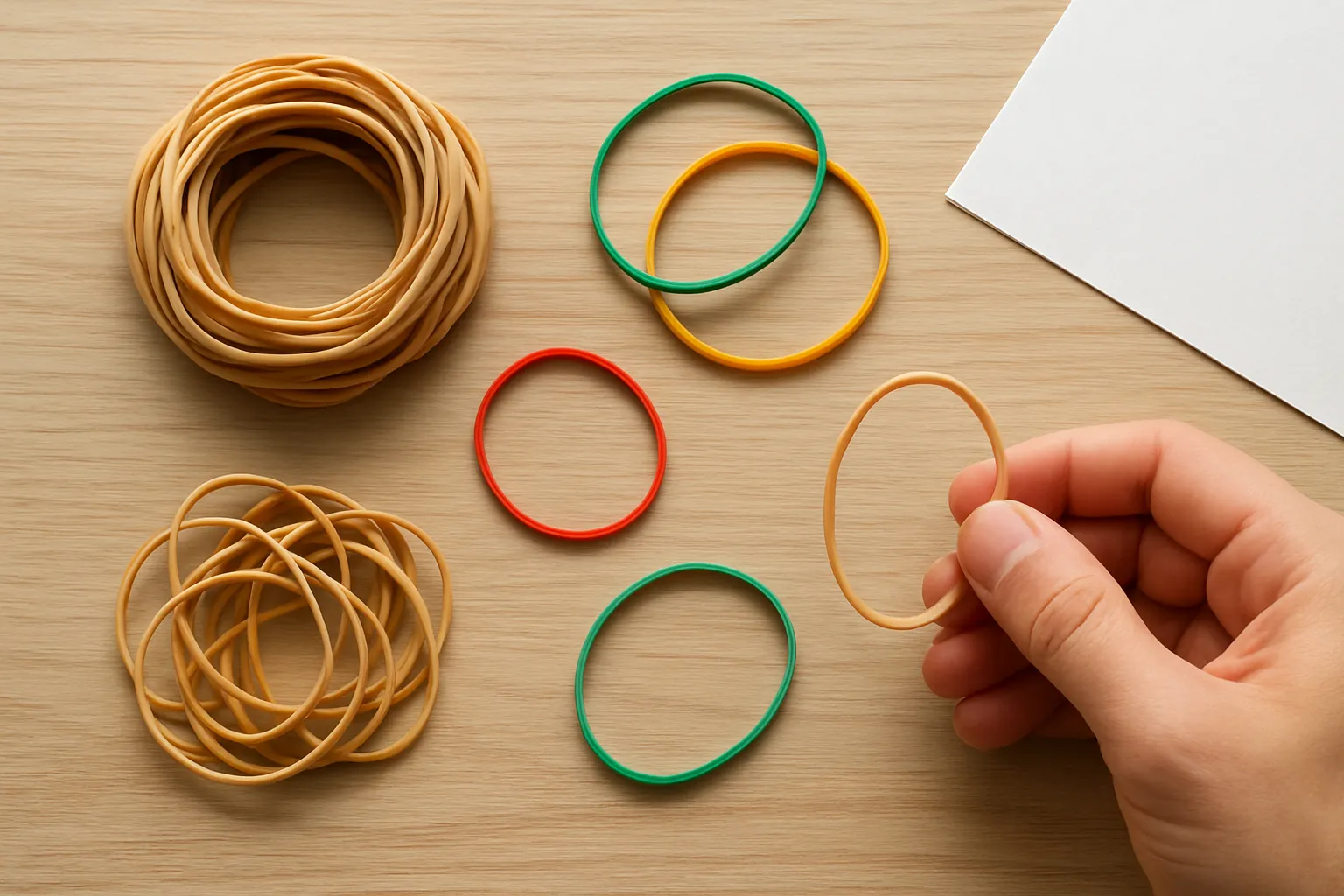
Selecting the right rubber bands enhances productivity for organizing documents, crafting, or household tasks. Understanding the differences between types and sizes is crucial for achieving the best results. This guide simplifies the selection process and provides practical tips for effective use.
Step-by-Step Guide to Selecting Rubber Bands
Choosing rubber bands starts with identifying their intended use.
1. Determine Purpose: Different applications call for different rubber bands. Standard office rubber bands suffice for bundling papers, while colorful bands are better for crafts.
2. Consider Size and Thickness: Rubber bands come in various sizes, typically measured in inches. Smaller bands (1/8 inch wide and 2 inches long) are suitable for lightweight tasks, while larger bands (1 inch wide and 8 inches long) can handle heavier items. Thickness affects strength; thicker bands are more durable but less flexible.
3. Material Matters: Most rubber bands are made from natural rubber or synthetic materials. Natural rubber bands are elastic but may degrade in sunlight. Synthetic bands withstand UV light better and come in varied colors. Choose based on exposure to elements.
4. Recommendations Based on Common Uses:
- Office Use: Standard, medium-sized rubber bands (1/4 inch thick) work well for document bundling.
- Crafting: Look for colorful or patterned rubber bands designed for creative projects.
- Heavy-Duty Tasks: Choose thick, wide bands for bundling heavy items.
Comparison of Different Types of Rubber Bands
Understanding the various types of rubber bands can impact your decision-making process.
- Standard Rubber Bands: Commonly used for light to moderate tasks like organizing papers. Cost-effective but may not hold up under heavy tension.
- Heavy-Duty Rubber Bands: Designed for demanding applications, these bands can withstand greater tension, ideal for larger bundles.
- Colored Rubber Bands: Add a visual element, popular for crafts or organization systems. Ensure you select a quality brand to avoid breakage.
- Latex-Free Rubber Bands: Made from synthetic materials, crucial for those with latex allergies. May be less flexible and more costly.
- Specialty Rubber Bands: Designed for specific tasks, such as dental bands, often come at a higher price.
Common Mistakes to Avoid When Using Rubber Bands
Beginners often make several mistakes that can lead to inefficiency. Here are key issues to watch out for:
- Wrong Size: Using bands that are too small can lead to breakage, while those too large may not provide adequate tension.
- Over-Stretching: Stretching rubber bands beyond their limits compromises elasticity. Stretch no more than twice their original length.
- Improper Storage: Storing rubber bands in hot or humid environments can degrade them. Keep them in a cool, dry place, ideally in a sealed container.
- Ignoring Wear and Tear: Regularly inspect rubber bands for cracks or brittleness before use to avoid unexpected failures.
Frequently Asked Questions about Rubber Bands
How do I choose the right rubber band for a specific task? Consider the task. For lightweight materials, a smaller band works well; for heavier items, opt for larger and thicker bands.
What is the best way to store rubber bands? Store rubber bands in a cool, dry place away from direct sunlight to prevent degradation.
Can rubber bands be reused? Yes, but inspect them for wear. Dispose of any that show signs of damage.
What size rubber band should I use for office tasks? A medium-sized rubber band (around 1/8 inch thick) is suitable for bundling papers.
Can rubber bands be used for crafting? Yes, they are versatile for crafting projects.
Are there eco-friendly alternatives to traditional rubber bands? Yes, look for biodegradable or natural latex options.
How long do rubber bands typically last? Lifespan depends on storage conditions and usage, but they can last several months to years if stored properly.