
Hair Tie Jar RFQs: Define the Colour Assortment
A canned hair-tie colour enquiry should turn the selected palette name into an agreed shade selection and mixing rule. Ask the supplier which shades belong to that option, whether the mix is fixed or variable, and which reference sample represents it. Keep that answer with the actual product version before approving the assortment for an order.
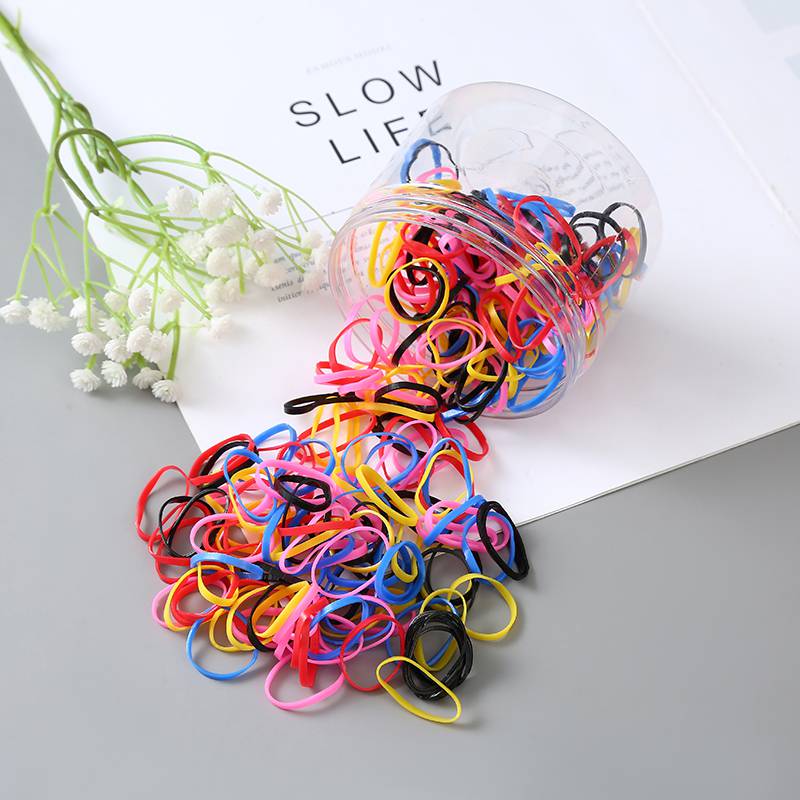
Official mixed-colour gallery presentation from the canned hair-tie listing. Use it to discuss the proposed palette, rather than treating the pictured mix as a fixed assortment recipe.
Ask what the catalogue palette names mean
Wangxing’s Children’s Hair Tie Rubber Band Canned page lists Plain, Fluorescent, Spring, New Jelly, Black, Transparent White and Solid White as colour options. These are the supplier’s published names. They provide a starting vocabulary for a wholesale TPU elastic bands enquiry, rather than a complete shade schedule.
Ask the supplier to identify which option it proposes to quote and explain its current shade selection. A seasonal name such as Spring does not specify an assortment by itself. Keep the supplier’s original option name beside the detailed response so purchasing can connect the explanation with the actual catalogue entry.
Choose a fixed or variable assortment rule
State whether the buyer requires a defined shade selection or is prepared to review a variable mixture. Ask the supplier what it can offer. If a fixed arrangement is proposed, request its specific shade references and agreed distribution. If variation is proposed, define what may change and which substitutions require a new decision.
If a variable mixture is offered, ask whether a named shade may be absent from an individual jar and whether substitutions can appear between batches. Record the supplier’s answer explicitly. This lets the buyer decide whether the proposed variability suits the intended assortment before approving its palette description.
Assortment field
Question to resolve
Reference requested
Catalogue option
Which named palette is offered?
Supplier option reference
Shade selection
Which shades belong in it?
Identified colour samples
Mixing rule
Fixed selection or permitted variation?
Written assortment terms
Substitution
What needs buyer approval?
Change decision and revision
A different mixed-colour gallery arrangement shows closed and open jars. Ask which shade selection and variation rule apply to the actual offer; the scene does not prove supplied proportions.
Use identifiable shade references
Ask for physical colour references or another agreed reference method for the shades important to the order. Give each accepted shade an identifier that both parties can use. A photograph of many bands in one jar helps discuss the overall appearance, but it can leave individual shades difficult to distinguish.
Where photographs support the discussion, ask for the selected shades to be shown separately and labeled. Keep the reference identity with the sample and supplier response. Agree the appearance-review conditions and acceptance basis instead of assuming that every screen presentation defines the same shade.
Keep transparent and solid options distinct
The page separately names Transparent White and Solid White. Preserve those names as different enquiry options and ask the supplier to show the relevant references. Do not merge them into one internal white option before deciding which appearance the buyer wants and which version is actually offered.
Apply the same approach to Plain, Fluorescent and New Jelly: request the supplier’s explanation rather than assigning a technical meaning from the wording. Ask whether those names describe a shade group, an appearance category or another catalogue distinction. Keep unresolved terminology visible until the reference is accepted.
Black gallery presentation from the same listing, retained as a separate colour-option reference. It does not establish the specification of a mixed palette or a reviewed physical sample.
Review the proposed palette with a sample
A sample approval checklist for TPU elastic bands can identify the offered product version, named palette and the individual shade references under review. Compare the sample mixture with the agreed selection. Record any missing, additional or substituted shade against the written assortment terms, rather than describing the whole sample as simply colourful or acceptable.
Identify the product and named palette.
Retain the accepted individual shade references.
State the permitted mixing variation.
Resolve substitutions before closing the palette decision.
If the buyer accepts some shades while others remain open, name that partial decision. Ask for a revised sample or reference where the supplier proposes a change. A useful approval should show which palette revision was accepted, rather than relying on a jar photograph that nobody can reconstruct later.
Carry the assortment terms into reorders
Reference the accepted palette and mixing rule on the quotation. For another order, ask whether the same shade selection remains available and identify any proposed change before reusing the earlier approval. Keep a new variable mix separate from a previously accepted fixed selection.
The enquiry can say: “Please define the shades included in the selected canned hair-tie palette, show the colour references and state any permitted mixing variation or substitutions.” Send it through the supplier contact page with the actual product link and the buyer’s preferred reference method.
Keep the evidence boundary clear
The page supplies colour names and catalogue images, not a verified shade recipe, guaranteed distribution or colourfastness result. Its TPU declaration and children’s product name do not establish material testing, age suitability, hair safety or performance. No physical sample or colour measurement was performed for this article. Obtain any required product-specific declarations and evidence separately from the palette approval.
Frequently asked questions
Does Spring define a fixed shade selection?
The name alone does not. Ask the supplier to identify the actual shades and mixing rule.
Can mixed colours be approved from one jar image?
Use identifiable references and written assortment terms for the actual offer; the image is a discussion aid.
What should a reorder reference?
The accepted product version, palette revision, shade references and permitted variation.
TPU elastic bandscolour assortmentpalette approvalRFQ