
TPU and Natural Rubber: Confirm Each Order Line
Keep the canned hair-tie and packaging-band material declarations on separate product lines. Ask the supplier to confirm the declared material for each actual offered version and identify the scope of any supporting document. If another material is proposed, request a clearly identified alternative and a separate buyer decision before treating it as the accepted order specification.
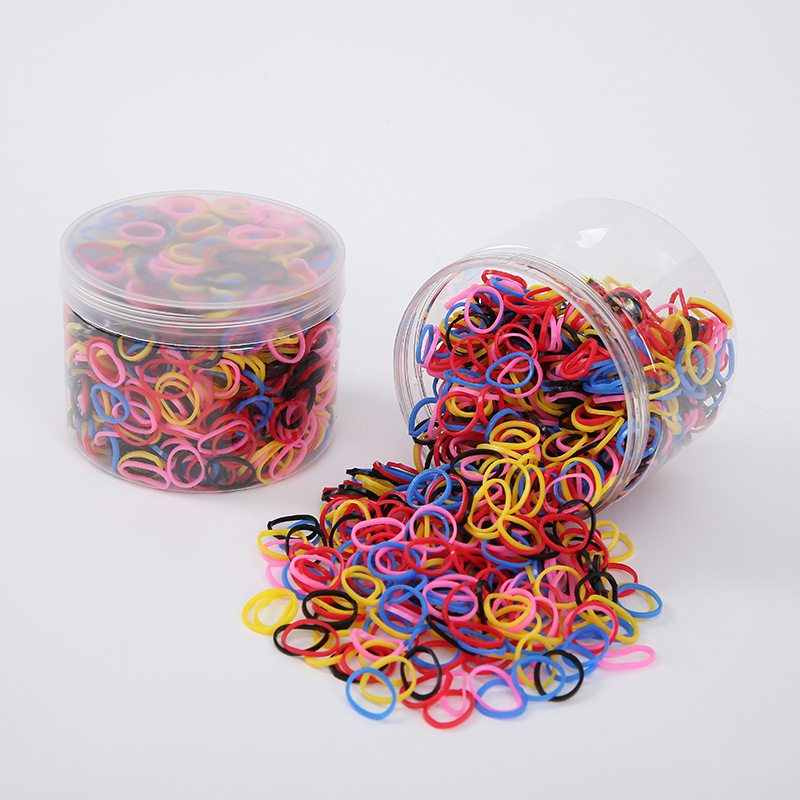
Official canned hair-tie presentation in a distinct two-jar arrangement. Its material field belongs to this product listing; the image itself does not establish composition.
Read each declaration on its own product page
Wangxing’s Children’s Hair Tie Rubber Band Canned page states “Material: TPU.” The separate Printed Packaging Rubber Band page states “Material: Natural rubber material.” These are two supplier-published declarations attached to different product references.
For a wholesale TPU elastic bands enquiry, retain the canned product URL beside the proposed item. For wholesale printed packaging rubber bands, use that separate listing and its declaration. Do not copy either material name across an assortment simply because the pictured bands share colours or a similar loop form.
Actual catalogue product
Published material field
Supplier confirmation requested
Canned hair-tie product
TPU
Exact offered band version and declaration scope
Printed Packaging Rubber Band
Natural rubber material
Exact offered band version and declaration scope
Confirm which physical item the statement covers
Ask the supplier to connect each material response with its proposed product reference and version. Confirm whether the declaration describes the elastic band body and identify any separately described component where relevant. The surrounding jar, bag or printed panel should not inherit the band-material wording without its own explanation.
Keep the source wording intact until the supplier clarifies it. If the buyer requires a more detailed material description, ask for that information explicitly. A broad catalogue field and a complete formulation are different levels of information, so the purchasing sheet should show what was actually supplied rather than expanding the declaration by assumption.
Separate Printed Packaging Rubber Band gallery reference. Keep its supplier material declaration on that product line; existing branding and promotional wording are catalogue context, not approved buyer claims.
Link supporting information to the proposed version
Request available supplier material information with a product or material reference, date and stated scope. Ask the supplier to explain how that reference connects to the quoted band. If a document names a different item or material version, keep the relationship open until it is explained.
Retain the information under its actual description. A supplier statement, technical description and test report should not be renamed as the same kind of evidence. Where the document covers a broader range, ask which entry applies to this order line and preserve any qualification beside the declaration.
Treat a substitute as a new proposal
If the supplier proposes another material, ask it to state the proposed material name and the product line being changed. Request a revised product reference or version description so the alternative can be distinguished from the original offer. A shared colour or packaging presentation should not conceal the change.
Ask which declared fields and supporting information change with the proposal. Keep the requested specification and the offered alternative side by side while the buyer reviews them. The material names on these two catalogue pages do not establish that one product is an approved replacement for the other.
Scope each alternative to its named product line. The response should identify the original reference, proposed replacement and the material declaration for the replacement, so purchasing can assess that specific change without combining unrelated offers.
Loose-band view from the same packaging-band listing. Appearance can help identify the referenced product but cannot verify a formulation or establish an accepted substitute for the canned hair ties.
Keep the sample identity with the declaration
Identify the sample representing each proposed product line and retain its connection to the supplier’s material response. Photographs can help distinguish the submitted items, but they should remain identity references. Ask the supplier to identify any replacement sample or revised material proposal before reusing an earlier approval.
Name the actual product and offered version.
Retain the supplier’s material wording and scope.
Link each supporting document to that line.
Identify alternatives and buyer decisions separately.
Where the buyer needs a particular use-related outcome, define that requirement separately and request the relevant evidence for the proposed version. The material-line review establishes which declaration is being considered; it does not replace evaluation of the actual purchasing requirement.
Carry the accepted material line into reorders
Attach the accepted product and material references to the quotation. Ask the supplier to flag any proposed material change before an earlier line is reused for another order. Keep the buyer’s acceptance tied to the specific proposal reviewed, including the applicable material-response revision.
An enquiry can read: “Please confirm the material declaration separately for the canned hair-tie product and Printed Packaging Rubber Band. Identify the offered versions, supporting-information scope and any proposed material alternative.” Send it through the supplier contact page with both actual product links.
Keep the evidence boundary clear
The TPU and natural-rubber wording is attributed to the respective supplier pages, not independently verified composition. No sample was chemically analysed or tested for this article. Neither material label nor catalogue image establishes safety, age suitability, hair-use results, environmental performance or interchangeability. Existing package claims remain catalogue context; request any required product-specific declarations and evidence separately.
Frequently asked questions
Does one declaration cover both catalogue products?
Keep each page’s material wording with its own product and ask the supplier to confirm the actual offered version.
Can a similar-looking band be an accepted substitute?
Request the proposed material and product changes, then record a separate buyer decision.
What belongs with the accepted order line?
The product reference, material declaration scope, supporting-information references and applicable sample or proposal revision.
TPU elastic bandsnatural rubber declarationmaterial alternativesRFQ